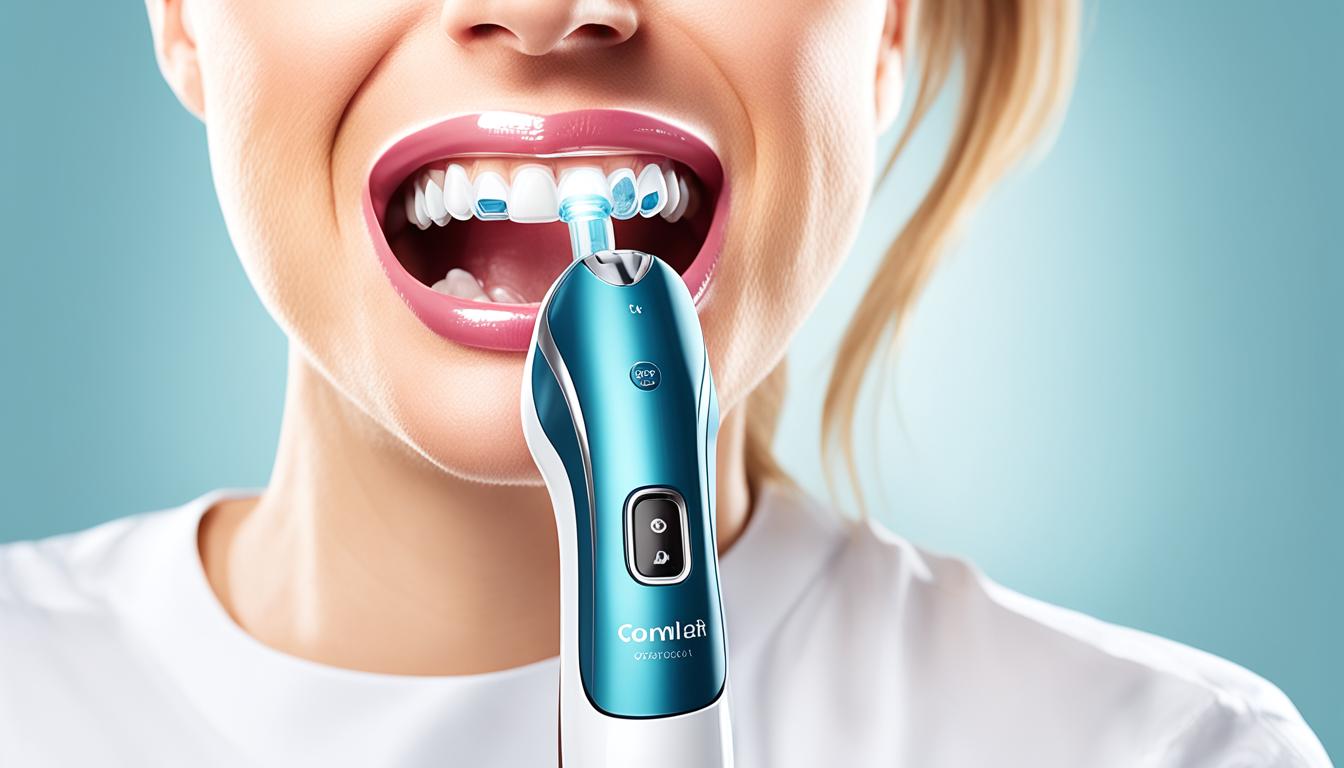

A “tongue crib” is an orthodontic tool. It helps correct bad oral habits. This leads to better dental health.
It focuses on stopping thumb sucking and tongue thrusting. These habits can cause uneven teeth and facial changes. The tongue crib is a new way to boost oral health.
The tongue crib is key in changing dental care. It brings a fresh solution for oral health and wellness.
Understanding Tongue Thrust and Its Classification
“Tongue thrust” is when the tongue pushes against the teeth while swallowing or resting. If not treated, this issue can continue from childhood into the teen years. Let’s look at the different types of tongue thrust.
Non-deforming Tongue Thrust
A non-deforming tongue thrust makes the tongue press against the teeth but doesn’t change dental structures. It doesn’t mess up the mouth’s layout, yet it’s tricky for keeping teeth healthy.
Deforming Anterior Tongue Thrust
The deforming anterior tongue thrust is serious and can hurt your teeth. It’s broken down into a few subtypes:
- Anterior open bite: Here, the front teeth don’t meet, leaving a gap when the mouth is shut.
- Anterior proclination: This makes the upper front teeth stick out.
- Posterior crossbite: This is when the upper back teeth sit inside the lower ones.
Deforming Lateral Tongue Thrust
This tongue thrust affects the side teeth.
- Posterior open bite: The back teeth don’t touch, leaving spaces.
- Posterior crossbite: It’s like the anterior crossbite but with the side teeth.
- Deep overbite: The upper teeth cover the lower teeth a lot.
Understanding these tongue thrust types is key for tackling their specific problems.
What is a Tongue Crib?
A tongue crib appliance is specially made to stop the bad habit of tongue thrusting. It’s a key device in orthodontics. This tool helps fix mouth habits by stopping the tongue from moving too much.

Components and Design of a Tongue Crib
The tongue crib is made of strong stainless steel parts. It has fixed versions and ones you can remove. You can choose from different styles like Fixed Tongue Loops and Upper Hay Rake.
The careful design of a tongue crib makes sure it does its job well. It keeps the tongue in place and helps teeth line up right.
Adjustable Tongue Crib: Advantages
The adjustable tongue crib is unique because it can change size and shape. It has special helices for easy, safe adjustments. This means more comfort for the user and better results.
This type of crib can be tweaked for height and angle. That makes it work better over time.
| Component | Description |
|---|---|
| Fixed Tongue Loops | Sturdy loops fixed to the molar region, providing stability and restricting tongue movement. |
| Tongue Fence | A horizontal barrier that prevents the tongue from thrusting forward. |
| Upper Hay Rake | Vertical prongs that impede the tongue’s contact with the upper teeth. |
| Mittal Bonded Tongue Thrusting Appliance | A customized appliance bonded to teeth, particularly effective in severe tongue thrust cases. |
| Adjustable Helices | Spiral components that permit easy height and angle adjustments of the tongue crib. |
How Does a Tongue Crib Work?
A tongue crib is a special tool used by orthodontists. It helps change where the tongue rests, making sure teeth come in right and straight. It also stops the tongue from moving too much, which is good for the mouth’s health.

Mechanism of Action
The main job of a tongue crib is to keep the tongue from pushing on the teeth. This is important for teeth to grow in correctly. It sits across the roof of the mouth, stopping the tongue from moving too much. With this, the tongue learns to stay in a better spot. This helps fix open bites, making the teeth look nicer together.
Impact on Oral Health
Using a tongue crib makes a big difference for mouth health. It stops bad habits like tongue pushing. This helps teeth line up better and avoids problems. A good tongue position also means cleaner teeth and less chance of tooth decay and gum disease. But, not everyone finds it easy to get used to a tongue crib. There might be some discomfort at first, which can make it hard to stick with using it.
Tongue Crib in Orthodontics
The tongue crib in orthodontics is key for solving tongue thrusting and dental problems. It gets used in a full treatment plan. This may include exercises to train the mouth and tongue muscles right.
For adults, the tongue crib in orthodontics is very accurate. It helps align things well because adults’ mouths are fully grown. This means better dental health in the end.
Often, tongue cribs are used with braces to fully fix misalignments. This mix helps with tongue thrust and any bad bites. So, orthodontists can tackle dental problems in many ways, leading to strong results.
| Method | Benefit | Considerations |
|---|---|---|
| Tongue Crib | Corrects tongue thrusting behavior | Initial discomfort, effective in complex cases |
| Myofunctional Exercises | Retrains muscles for proper positioning | Consistency required for effectiveness |
| Traditional Braces | Aligns teeth and corrects bite | Long-term commitment, regular adjustments needed |
| Comprehensive Treatment Plan | Addresses multiple dental issues simultaneously | Higher complexity, coordinated planning |
Tongue Crib Therapy: Benefits and Challenges
Tongue crib therapy is a powerful way to tackle tongue thrust issues. It uses a special appliance to help. This device offers big benefits but also has some challenges to get used to. Knowing these can lead to better treatment results.

Benefits in Correcting Tongue Thrust
Tongue crib therapy is great for fixing tongue thrust. This problem often messes up how teeth line up. The tongue crib stops the tongue from pushing on the teeth the wrong way. This helps teeth move correctly.
It also improves oral health and can fix open bites and tooth problems. Plus, it may help avoid speech issues and make teeth look better. These are big reasons why tongue crib therapy is valuable.
Challenges in Adaptation
Starting tongue crib therapy can be hard for some. The biggest problem is feeling uncomfortable at first. This makes some people want to stop the treatment. Younger patients might find it especially tough to have something new in their mouth.
But, the design of modern tongue cribs is more patient-friendly. They can be adjusted easily. This helps a lot in getting used to them. It makes the beginning smoother and helps people stick with it.
Tongue Crib for Kids: Special Considerations
When looking at a tongue crib for children, we must consider several key factors. This includes checking its success and detailed plans for its use and follow-ups. These steps are essential for the success of braces for kids.

Effectiveness in Children
The tongue crib for kids often works well to fix bad oral habits. This includes stopping thumb sucking and correcting tongue thrusting. In my work, I have seen it lead to better tooth alignment and mouth health.
Because kids’ bones are more flexible, properly adjusting the tongue crib helps a lot. This flexibility means treatments can work better for them than for adults.
Implementation and Follow-up
Adding a tongue crib in children’s orthodontics needs a special plan. First off, explaining everything to both the child and their parents is key. Then, having regular check-ups is vital to see how things are going and to make any needed adjustments.
Tools like pictures and kind words help kids get used to their new braces. Kids’ bones change as they grow, needing us to watch closely. This lets us make needed changes for the best results.
Fabrication and Adjustment Techniques
Orthodontists need to know how to make tongue crib fabrication well. They need this knowledge to make treatments better. Making and adjusting these devices needs care for good results and comfort.
Fabrication Process
Making a tongue crib involves using stainless steel to create 3-4 cribs. These cribs have special parts like helices and U-loops. They help make adjustments easier. The design makes the cribs strong and flexible, which lowers breakage risk. The way these parts are set up helps distribute force well. This helps the treatment work better.
Adjusting Crib Height and Angulation
To adjust tongue cribs, you need certain skills. Adjusting crib height and angulation involves changing U-loops and helices. These changes impact where the crib sits and its angle.
When making these adjustments, the U-loops’ flexibility is important. It lets the crib change smoothly without breaking. This flexibility lets the device be customized for each patient. This improves how well the treatment works and patient comfort.
| Adjustment Technique | Purpose | Advantage |
|---|---|---|
| Compressing U-loops | Decrease crib height | Precise control of vertical position |
| Expanding U-loops | Increase crib height | Minimized discomfort during adjustment |
| Opening helices | Forward angulation | Improved anteroposterior alignment |
| Closing helices | Backward angulation | Enhanced stability and fit |
In summary, making tongue cribs well and knowing how to adjust them is key. It ensures each device fits the patient’s needs. This leads to better oral health and people sticking with their treatment.
Conclusion
The tongue crib is a big step forward in orthodontics. It helps fix bad habits like tongue thrust and thumb sucking. These habits can cause a lot of dental problems.
Using a tongue crib helps keep your mouth healthy. It works well to correct these habits. Plus, it helps make your teeth straight and healthy.
The tongue crib has really changed over time. Now, we have adjustable tongue cribs. These are great because they can be changed to fit better. This means they’re more comfortable for the person using them.
Being able to adjust these cribs is important. It helps make sure the treatment works well over time. This makes the process easier for everyone.
In the end, the tongue crib has made a huge difference in orthodontics. It’s great at fixing bad mouth habits. At the same time, it helps keep your mouth healthy.
Adjustable designs make treatment better for people. It’s a tool that works well for everyone, no matter their age. As we keep improving these tools, orthodontic care will keep getting better.