

More and more people want to know about superfoods these days. They often ask: Does cacao have caffeine? Its popularity and health benefits make them curious. This article will explain what cacao is, including its caffeine content. It will also show why many consider it a superfood. Cacao is not only tasty but also packed with energizing qualities that many find appealing.
We’re going to take a closer look at this favored bean to uncover its superfood secrets. Let’s find out the truth about cacao’s caffeine content. It may just surprise you. Cacao has been used since ancient times and today, it’s seen as a nutritional goldmine, not just a simple snack.
What is Cacao?
Cacao is the raw bean that’s full of nutrients. It’s often mixed up with cocoa, which is processed. Understanding the difference between these two starts our journey into cacao’s world.
Difference Between Cacao and Cocoa
Looking into the difference between cacao and cocoa, it’s key to know that cacao is the unprocessed bean. In contrast, cocoa comes from heating and processing the bean. This cacao and cocoa comparison shows cacao keeps more nutrients, offering bigger health benefits because it’s raw.
Forms of Cacao: Nibs, Powder, and More
You can find cacao in forms like cacao nibs and
. These can be added to many foods, like smoothies, baked goods, and desserts. Cacao nibs give a rich, bitter taste being less processed, while cacao powder is great for recipes needing a chocolaty touch, as it’s finely ground.
Historical Significance
The story of cacao history is filled with cultural meaning. It came from ancient Mesoamerica, used as money and in sacred rituals. Cultures like the Mayans and Aztecs valued it for nutrition and spiritual reasons. This history isn’t just about food. It’s a deep cultural story, enriching our appreciation for cacao today.
To sum up cacao’s key points:
- Forms of Cacao:
- Cacao Nibs
- Cacao Powder
- Cultural Significance:
- Started in Mesoamerican Civilizations
- Valued as Currency and for Sacred Uses
The Nutritional Profile of Cacao
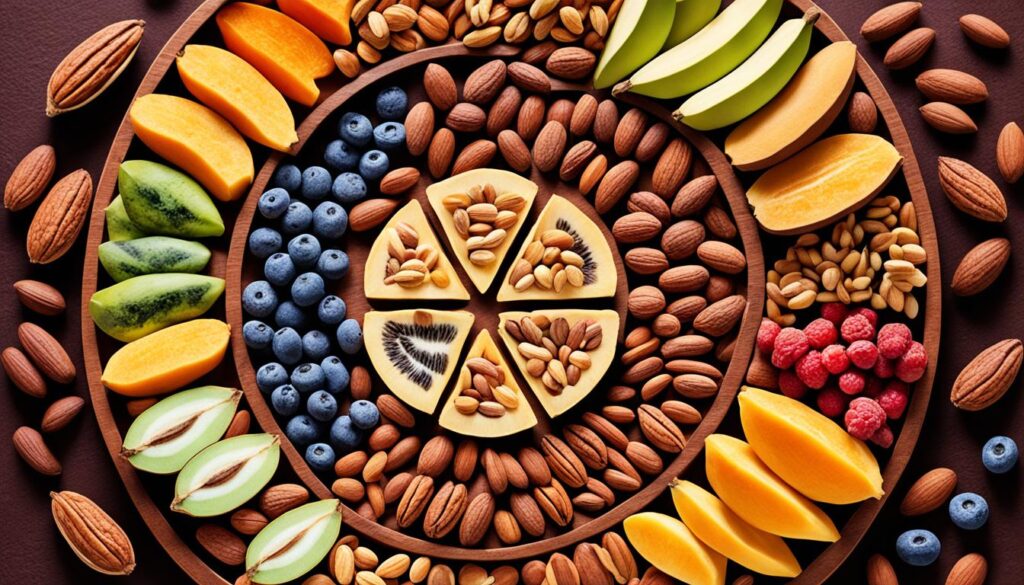
Cacao is a powerhouse of nutrition that offers many health benefits. It’s packed with essential nutrients. These make cacao a superfood.
Antioxidants in Cacao
Cacao is famous for its rich antioxidant content. Antioxidants like flavonoids fight oxidative stress and inflammation. This can lessen chronic disease risks and improve your health. Studies show cacao’s antioxidants boost heart health by improving blood flow and lowering blood pressure.
Essential Nutrients Found
Cacao is full of important nutrients such as magnesium, iron, and B-vitamins. Magnesium is vital for muscles and nerves. Iron helps with blood and oxygen in the body. B-vitamins are key for metabolism and energy.
Health Benefits Linked to Cacao Nutrients
Cacao’s nutrients offer wide-ranging benefits. Antioxidants support heart health. Essential nutrients help metabolism. Cacao boosts energy with caffeine and theobromine. It might also help with weight control by affecting metabolism and fullness.
| Nutrient | Benefits |
|---|---|
| Flavonoids | Improves heart health, reduces inflammation |
| Magnesium | Supports muscle and nerve function |
| Iron | Essential for blood health |
| B-Vitamins | Boosts metabolic function |
Does Cacao Have Caffeine?
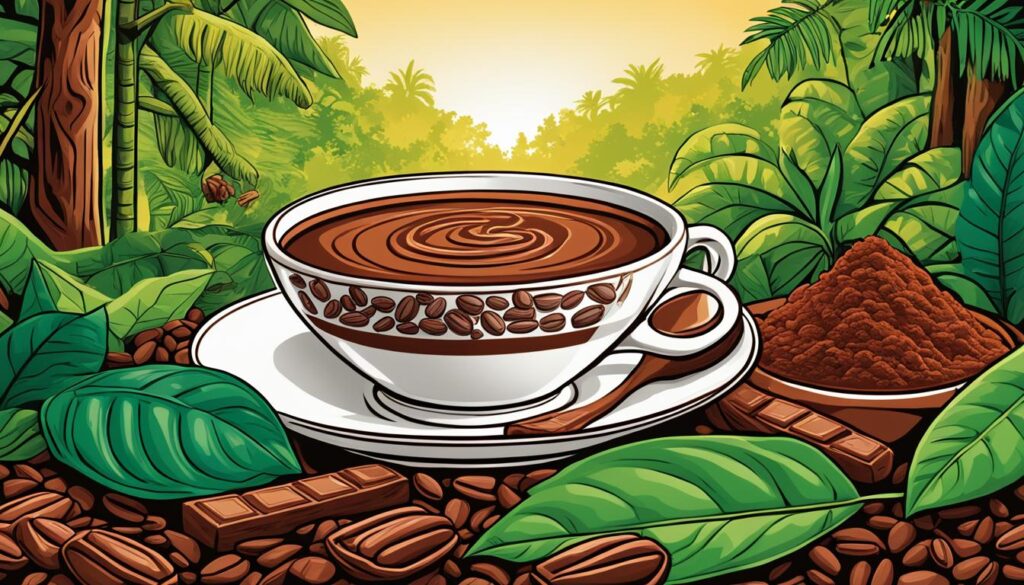
Cacao and caffeine are different when we talk about energy. People often wonder how much caffeine is in cacao. It’s known as a superfood because of things like this.
Caffeine Content in Cacao vs. Coffee
Cacao Caffeine Content is much lower than coffee’s. For instance, an ounce of raw cacao has around 12 milligrams of caffeine. However, a cup of coffee can have 95 to 200 milligrams. This is great news for those who are sensitive to caffeine but still want a boost.
| Source | Caffeine Content per Serving |
|---|---|
| Cacao (1 oz.) | 12 mg |
| Coffee (8 oz. cup) | 95-200 mg |
Theobromine and Its Effects
Cacao not only has low caffeine but also contains theobromine. Theobromine Effects are gentler. It slightly increases heart rate and gives a steady energy boost. Unlike caffeine, it doesn’t lead to jitters or crashes. So, cacao is great for those wanting to stay alert without the side effects.
Impact on Energy Levels
Cacao’s little caffeine and theobromine offer a unique Cacao Energy Boost. This combo improves focus and mood gently. It doesn’t have the ups and downs like coffee does. Comparing Cacao vs Coffee Caffeine, cacao is a softer choice for those avoiding too much caffeine.
Health Benefits of Cacao
Cacao is packed with health perks, especially for the heart, metabolism, and energy levels. It can even help with weight control. Let’s explore why adding cacao to your meals is a great idea.

Cardiovascular Support
Cacao is full of flavonoids. These boost blood flow and keep cholesterol in check. Your heart reaps the rewards.
Eating cacao regularly may lower blood pressure. It keeps your cardiovascular system healthy.
Metabolic Function Improvement
Cacao plays a big role in how our bodies process sugars and insulin. The polyphenols in it help manage blood sugar levels. This can lower the risk of metabolic issues.
Energy and Fatigue Reduction
Cacao gives a gentle energy lift, thanks to caffeine and theobromine. It doesn’t make you jittery like coffee does. You’ll feel more awake and less tired.
Potential Weight Management Benefits
Cacao might help you control your weight. It curbs hunger and burns fat. Adding cacao to a balanced diet can help you feel full and lose weight in a healthy way.
| Benefits | Description |
|---|---|
| Cacao Cardiovascular Support | Enhances endothelial function, improves blood flow, reduces blood pressure. |
| Cacao and Metabolic Function | Improves insulin sensitivity, aids glucose metabolism, supports overall health. |
| Energy Boost from Cacao | Provides sustained energy boost, reduces fatigue, enhances mental alertness. |
| Cacao for Weight Management | Regulates appetite, increases fat oxidation, supports weight loss initiatives. |
Comparing Cacao and Dark Chocolate
Let’s look at how cacao and dark chocolate differ. This includes caffeine content and health benefits. Cacao beans start the same but are processed differently. This affects their nutrition and health perks.
Caffeine Content in Dark Chocolate
Dark chocolate has more caffeine than cacao. It’s because it’s processed more and has more cocoa solids. For example, an ounce of dark chocolate has about 12 milligrams of caffeine. Cacao has about 9 milligrams in the same amount. If caffeine bothers you, cacao might be better. Yet, both give a mild boost.
Differences in Health Benefits
Cacao usually wins in the health department because it’s less processed. It’s full of antioxidants, magnesium, and iron. These nutrients are good for the heart, brain, and overall health. Dark chocolate is still good but has extra sugar and fat. Even so, it’s flavonoids help the heart and might lower blood pressure. Both have benefits, but cacao is the healthier choice.
Nutritional Value Comparison
When comparing their nutrition, cacao and dark chocolate have key differences. Cacao keeps more of its natural goodness, with lots of antioxidants, fiber, and vitamins. Dark chocolate is healthy but not as much. It’s processed more and has added sugars and fats. If health is your top concern, choose raw cacao. It offers a richer, more natural nutrient mix without the extra stuff in dark chocolate.