

Fly fishing is more than just a hobby. It is an art form of precision, patience, and connection with nature. In the back casting room, you learn the balance of technique and peace. It’s about the quiet art of fly fishing finesse, not just catching fish.
Jim Valle, a seasoned guide, talks about the sport’s details. He focuses on making custom flies and skillful casting. Fly fishing offers lifelong learning and joy. In the casting studio, you see that fly fishing mastery is more than catching fish. It’s about lessons that matter beyond the water.
The Beauty and Poetry of Fly Fishing
Fly fishing is like entering a unique audition room. Nature requires skill, patience, and a bit of luck here. The casting of the fly line mirrors a dancer’s grace, showcasing the scene’s fly fishing beauty.
The art of tying flies demands precision. It mirrors the detail in fly fishing poetry. Every component must work together to craft a lure that glides on water, drawing fish near. Fly fishing combines disciplined technique with the joy of merging with nature.
This sport’s charm is its simplicity. An angler, like an actor, captures attention with the fly line’s silent sweep. The real beauty of fly fishing lies in its peaceful moments. It’s in the wait for a bite, the water’s gentle movement, and releasing the catch back to nature.
In the end, fly fishing tests one’s fishing ability and celebrates nature’s majesty and peace. It’s a dance, a timeless show of fly fishing beauty. It links anglers with the poetic rhythm of the natural world.
Understanding Fly Fishing Gear and Equipment
Fly fishing is more than casting a line. It’s an art needing the right tools for various fishing situations. Knowing how to use different fly fishing gear is key to successful fishing. Let’s explore the main parts of fly fishing gear and how to choose the best for you.
Fly Rod
Your fly rod is like your hand’s extension, vital for casting. When picking a fly rod, think about its length, weight, and how it moves. Long rods work best in big waters, while short rods fit tight spots well.
The rod’s weight should suit the fish you’re after. The action—fast, medium, or slow—affects how the rod bends and moves.
Fly Reel
A fly reel does more than hold line; it’s part of your fishing technique. Look for a durable reel with a smooth drag to fight fish. Reels made of anodized aluminum fight off rust. Your reel should balance with your rod for better casting and fish handling.
Fly Line
Fly lines vary, like weight-forward, double-taper, and sinking types. The right line depends on where you fish and what fish you’re after. Weight-forward lines are good for long casts. Double-taper lines are best for soft landings. Use sinking lines to fish in deep waters. Make sure your fly line fits your rod and reel.
Leaders and Tippet
Leaders and tippet make your flies look real to fish. Leaders get thinner end to end, smoothly sending energy from line to fly. They come in various lengths and strengths for different fishing needs. The tippet is the thinnest part and should be almost invisible to fish. The right tippet strength prevents break-offs and keeps you hidden.
Essential Accessories
Choosing the right fishing accessories makes your time on the water better. You’ll need nippers for cutting lines, forceps for removing hooks, and landing nets for handling fish. Good accessories help you handle fish safely and set up your gear right.
| Item | Purpose | Considerations |
|---|---|---|
| Fly Rod | Casting the fly | Length, weight, action |
| Fly Reel | Line storage and drag system | Durability, balance with rod |
| Fly Line | Connecting fly to rod | Type (e.g., weight-forward) |
| Leaders and Tippet | Presentation of the fly | Length, strength |
| Accessories | Various support tasks | Quality, functionality |
Knowing about fly fishing gear, from rods to reels and lines to leaders, is basic for anglers. Armed with this info, you’re set to improve your fly fishing trips.
Essential Casting Techniques
Fly casting is like a dance that needs practice. You must learn many essential casting techniques to get good at it. The basic overhead cast helps you send your flies out nicely and on target.
The roll cast works great when you’re stuck in tight spots. It lets you cast smoothly without needing much space behind you.
The reach cast helps with lining up your fly just right. It’s key for a natural fly movement, especially in calm, clear waters where fish are extra cautious.
For those looking for a challenge, the double haul is next level. It uses a special pull-and-release to throw your line farther, even against the wind.
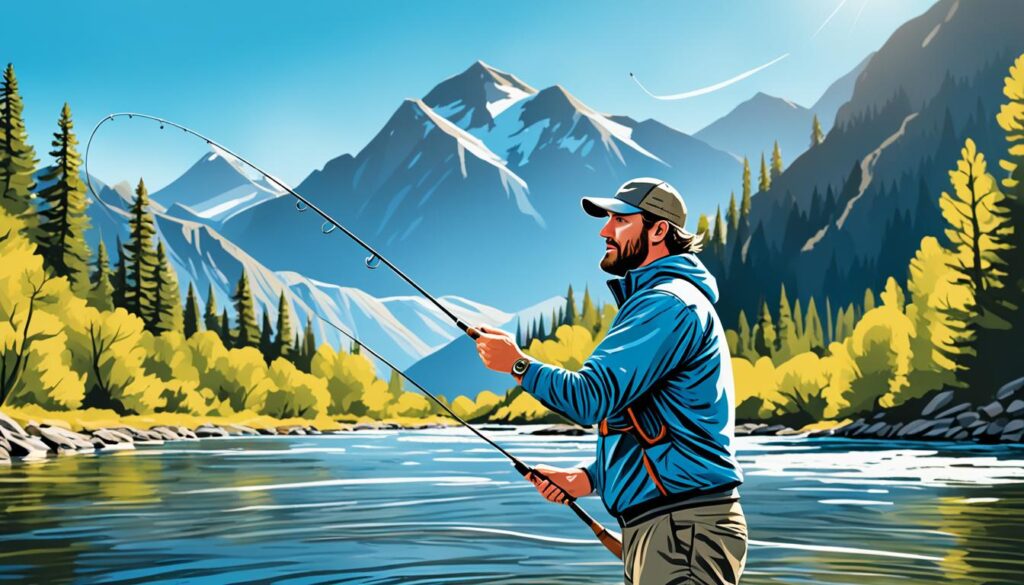
Knowing how each cast works is key to getting better at fly fishing. The science of casting, like the way the line loops and moves, helps get your fly where it needs to go. Getting these techniques down makes fishing more fun and rewarding.
| Cast Technique | Purpose | Ideal Scenario |
|---|---|---|
| Overhead Cast | Basic Casting | Open water, general use |
| Roll Cast | Simplified delivery without backcast | Confined spaces |
| Reach Cast | Precision line control | Slow, clear waters |
| Double Haul | Increased distance and speed | Windy conditions, long casts |
Every great angler has a mix of these skills. Whether working on a basic cast or advancing to a double haul, each technique makes your fly casting better. Remember, good fly casting starts with understanding and perfecting these essential casting techniques.
Developing Finesse in the Back Casting Room
To get better at fly fishing, you need to work on your casting finesse, especially in the back casting room. This skill makes your fly fishing better and lets you fish in many places. Here are the basics for improving your casting finesse.
Fine-tuning Your Casts
When improving your casts, keep consistency and control in mind. Practicing regularly makes your cast more graceful and balanced. Working on finesse improves your line control and accuracy, making every cast more beautiful.
Improving Presentation Skills
How you present your fly is just as important as how well you cast. A delicate and precise presentation can mean catching a fish or not. Always work on making your cast look natural and match the prey’s behavior.
Handling Tight Casting Space
Small spaces require more skill. You need precision and creativity to manage tight casting areas. Practice refining your strategy to overcome these obstacles. This will prepare you for all fishing conditions, improving your finesse.
| Aspect | Technique | Benefit |
|---|---|---|
| Fine-tuning Your Casts | Consistent Practice | Better Line Control |
| Improving Presentation Skills | Refine Technique | Effective Fly Placement |
| Handling Tight Spaces | Precision Casting | Adaptability in Confined Areas |
Reading the Water and Fish Behavior
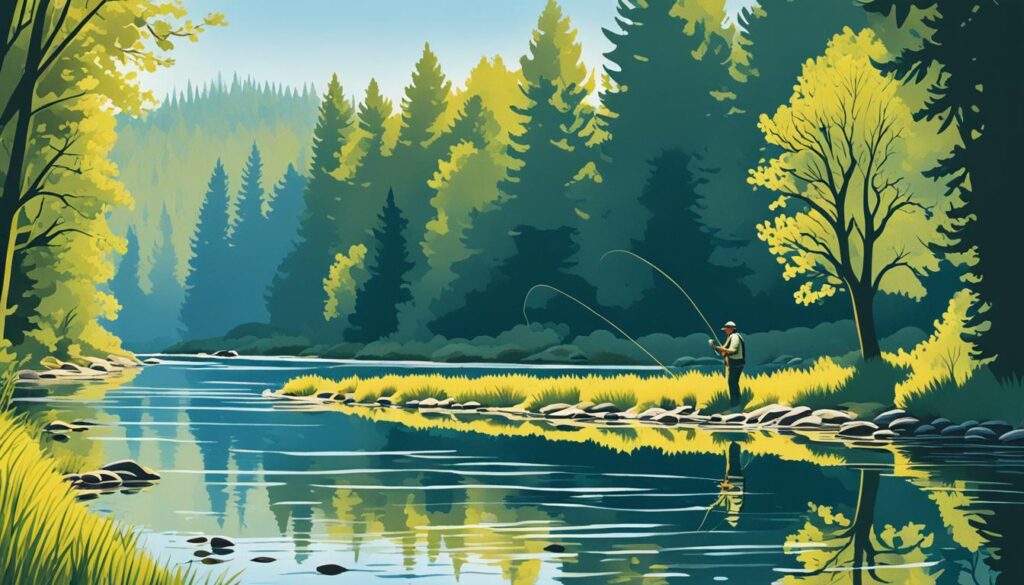
Fly fishing success depends on reading the water and knowing where fish hang out. If you get good at this, you’ll pick the right flies and stand in the best spots. It’s about seeing what’s under the water, learning how fish act, and how they eat.
Identifying Underwater Structures
Fish love hiding by rocks, logs, and weeds under the water. Spotting these spots helps you find where fish might be chilling. They like these areas because they’re safe from predators and have lots of food.
Understanding Currents
Currents in rivers are big for fish. They like places where they can wait for food without working too hard. If you watch how the water moves and finds eddies, you’re likely to find feeding fish. Knowing about these water flows can really help you catch more.
Observing Insect Activity
What insects are around affects fish and your fishing. Using flies that look like these insects can really lure them in. Watch what insects are around and how fish react to them. This knowledge will improve how you present your flies to them.
| Technique | Key Insights |
|---|---|
| Identifying Underwater Structures | Spot rocks, logs, and weed beds as fish habitats. |
| Understanding Currents | Note where currents flow to locate feeding fish. |
| Observing Insect Activity | Match fly selection to local insect hatches. |
Ethical and Sustainable Fly Fishing Practices
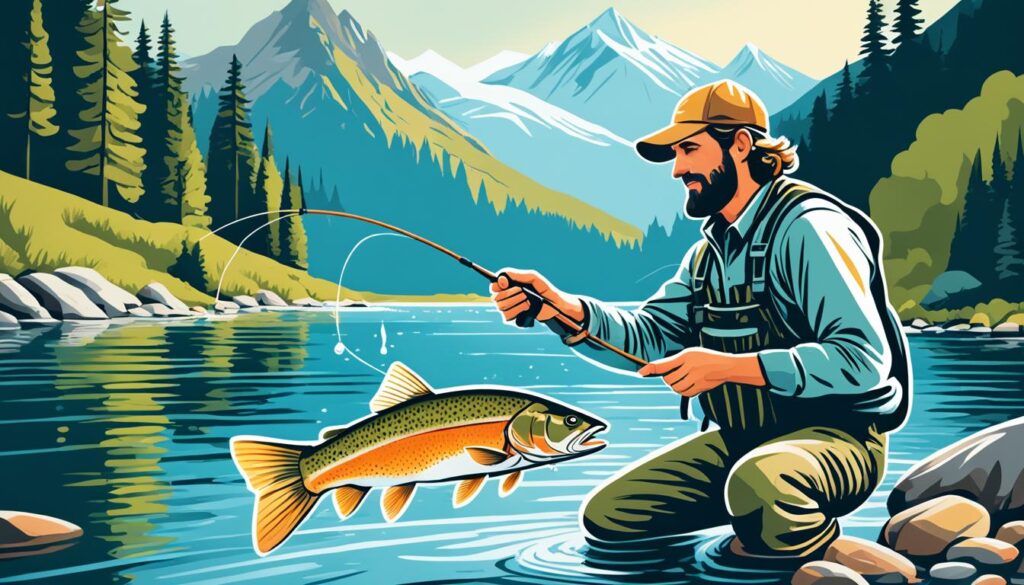
As an angler, my duty is to support ethical fly fishing and sustainable habits. These actions help keep our water ecosystems beautiful for others tomorrow. Using catch-and-release methods is key to caring for fish populations and the environment.
It’s crucial to handle every fish with extreme care, use barbless hooks, and release them back into the water swiftly and gently.
To be sustainable, I focus on reducing my environmental mark. This means taking out everything I bring in and respecting the homes of local wildlife. Here’s a quick look at important practices:
| Practice | Description |
|---|---|
| Catch-and-Release | Ensures fish populations remain healthy by returning them to their natural habitat unharmed. |
| Handle Fish Carefully | Use wet hands or gloves to reduce injury and stress to the fish during handling. |
| Barbless Hooks | Allot for easier fish release and reduce potential harm. |
| Minimize Ecological Impact | Adhere to principles like pack-in pack-out and respect wildlife habitats to reduce footprint. |
| Resource Conservation | Support local conservation initiatives and abide by fishing regulations to protect water resources. |
By using these ethical and sustainable fly fishing strategies, I build a respectful bond with nature. This respect pays homage to our ecosystems and brings joy in fly fishing.
Conclusion
Fly fishing is more than just catching fish. It starts with choosing the right gear. Each piece makes the experience better. The right fly rod and a well-tied fly let me cast beautifully.
Learning to cast well is key in fly fishing. The beauty of an overhead cast or the precision of a roll cast changes fishing into an art. Getting better at these techniques shows my commitment.
Fishing also involves understanding nature. Knowing where fish hide and their behavior turns each trip into a quest. It makes me appreciate nature more and fish responsibly.
Ultimately, fly fishing is an adventure that connects me with nature. It teaches me patience and respect for the environment. Fly fishing enriches my life, beyond just the thrill of a catch.