

O Farming, known as Innovative Harvests, is changing how we farm. It combines technology with caring for the environment. The focus is on sustainable farming practices, saving water, and using advanced methods like rainwater harvesting. It also looks at reducing waste and building a community that works together.
O Farming brings in new tech, varies crops, and uses land for multiple purposes. It aims to increase heightened agricultural productivity while protecting nature. Knowing what people want in terms of sustainability plays a big role in this change. This new way helps solve old problems like not having enough land or water, and issues crops face due to climate change. By introducing things like vertical farming, O Farming is finding creative solutions. In the end, O Farming supports organic agriculture for a greener future for both nature and farming.
Understanding the Philosophy of O Farming
O Farming blends farming with caring for the environment. Its core is about keeping an ecological balance. It uses new technology to make farming better. And it strongly supports organic methods and protecting our surroundings in many ways.
O Farming stands out by using less water and cutting down waste. It brings people together to make farming better for everyone. This way, it tackles old farming problems while connecting folks to the land they live on.
If you’re curious about how to start organic farming with O Farming, it’s all about modern organic methods. These steps help our planet and build a strong community focused on green farming. O Farming changes our view on farming for the better. By following its lead, we join a larger mission to take care of our planet through smart farming.
Key Principles of Sustainable Farming Practices
Sustainable farming keeps our environment balanced and agriculture productive. It combines important principles. These are vital for success and community well-being.
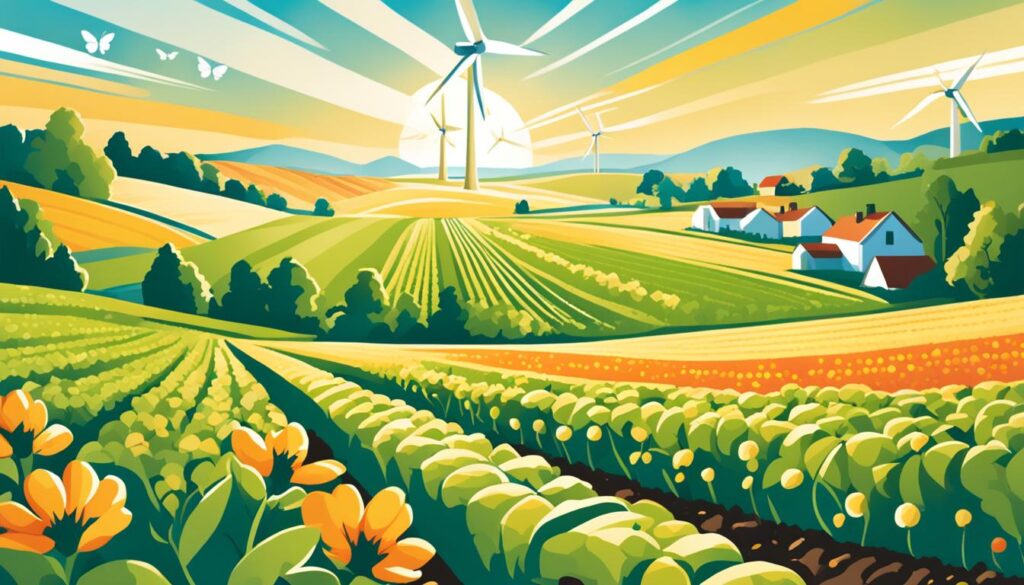
Water Preservation Techniques
Water preservation is key in sustainable farming. Methods like rainwater harvesting save water. This means we use less, saving it for future generations.
Waste Reduction and Recycling
Lowering waste is crucial in sustainable farming. Agricultural leftovers turn into bioenergy or compost. This boosts soil health and cuts environmental harm.
Community-Centric Models
Sustainable farming thrives with community support. It’s about people working together. This way, farms can be eco-friendly and profitable for everyone.
Technological Innovations in Sustainable Agriculture
Tech has changed modern farming for the better. Now, farming uses less to grow more food. This is key for using resources well and getting bigger harvests.
Precision Farming
Drones and AI make farming smarter. They help apply resources just where needed and keep a close eye on crops. This cuts down waste and boosts what farmers can grow.
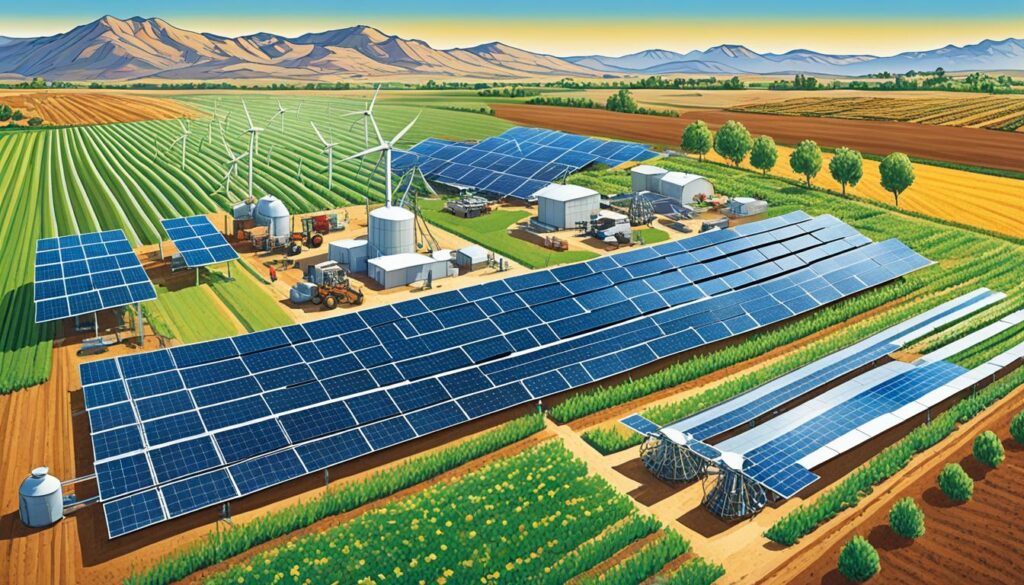
Vertical Farming
Vertical farming is a new way to farm. It stacks crops up high in controlled settings. It uses less ground, makes more food, and needs less water. This method also lets farmers grow food all year, making farming better for the planet.
Smart Irrigation Systems
Smart irrigation uses weather and soil data to water crops just right. It makes using water in farming more efficient and eco-friendly. Farmers save water and help their crops thrive, even when the weather changes.
Now, let’s compare these farming technologies:
| Technology | Core Function | Benefits |
|---|---|---|
| Precision Farming | Resource optimization and crop monitoring | Minimizes waste, enhances productivity |
| Vertical Farming | Controlled, stacked crop growth | Maximizes space use, increases yields |
| Smart Irrigation Systems | Regulates water usage based on data | Enhances water efficiency, reduces waste |
These advancements are creating a greener future for farming. With precise farming, vertical farming, and smart watering, we’re tackling the big issues. Like feeding more people and saving our planet’s valuable resources.
Benefits of O Farming
O Farming is changing the way we farm, offering big benefits. It makes farming more efficient while protecting our environment. By focusing on things like saving water and reducing waste, farmers can grow more food without hurting nature.

Unlike traditional farming, O Farming avoids harmful chemicals and grows different plants together. This is good for the soil and all the different living things there. This way of farming is better for the planet and helps farms keep producing food long into the future.
O Farming is great because it supports organic farming certifications. These certifications show that food is grown in a way that is good for the Earth. They also help farmers make more money by reaching customers who want to buy food that is responsibly produced.
O Farming encourages people to work together and use new technology. This is key to building strong communities and ensuring everyone has enough to eat. When comparing O Farming to traditional methods, it’s clear it’s a better choice. It’s better for those who grow our food and those who eat it.
What is O Farming: A Comparative Analysis with Conventional Farming
When we look at organic farming vs conventional farming, O Farming stands out. It focuses on keeping the soil healthy, encouraging biodiversity, and keeping nature in balance. This makes it very different from older methods.
In usual farming, chemicals and growing one type of crop are common. This can harm the land and make farming harder in the future. O Farming, on the other hand, uses sustainable farming practices. These practices help the soil stay healthy for a long time and use less water.

O Farming is special because it uses a variety of crops and the latest tech. This mix helps farms stay strong against tough weather and problems. By doing this, farms can do well and take care of our planet for everyone in the future.
| Aspect | O Farming | Conventional Farming |
|---|---|---|
| Soil Health | Maintains soil fertility and biodiversity | Often leads to soil degradation due to chemical use |
| Water Usage | Reduces water use through efficient techniques | Higher water consumption with traditional methods |
| Pesticides and Fertilizers | Uses natural or organic alternatives | Relies on synthetic chemicals |
| Biodiversity | Promotes crop diversity | Focuses on monocultures |
| Technological Integration | Leverages modern technology for monitoring and efficiency | Minimal technology use |
Along with these differences, O Farming uses organic farming resources. This fresh method makes sure we can make food in a way that lasts. It helps today’s needs without risking what we’ll need tomorrow.
Conclusion
O Farming is changing the future of farming. It combines new technology with green farming methods. Challenges like growing populations, less resources, and climate change need solutions. Organic agriculture is one good answer. It helps produce more food while taking care of our environment. O Farming focuses on saving water and cutting down waste. It shows that farming can do well and also help our planet stay healthy.
O Farming involves the community and stresses the importance of working together. There’s a big demand for sustainable products these days. This model shows that using cutting-edge technology and caring for the ecosystem can work hand in hand. It’s about creating a balance. Agriculture can be plentiful without harming the environment. The principles of organic farming that O Farming supports are a guide for worldwide agriculture in the future.
Exploring O Farming means more than just trying out new methods. It’s about changing the old ways of farming. It offers a way to make farming more helpful to the earth and to us. If more farmers and communities start using sustainable practices, our food supply and nature will benefit greatly. O Farming’s blend of efficiency and care for nature is a shining example for the future of farming.